Dual RTX 3060 budget split
41.3 write tok/s from two used 12 GB cards, if the second slot is not chipset x4.
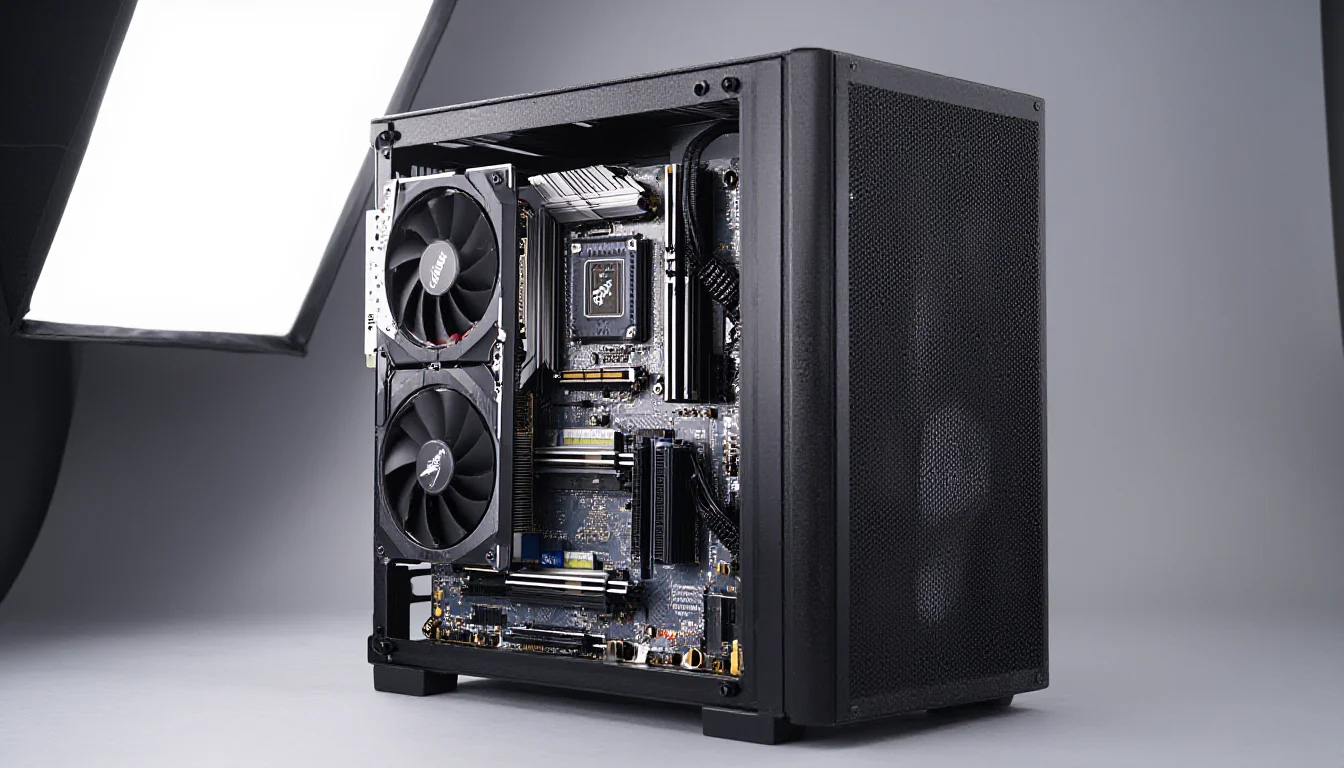
- Total price
- $1,814
- VRAM
- 24 GB + 64 GB System RAM
- Write tok/s
- 41.3
- Read tok/s
- 1239.8
- Load / idle power
- 490 / 68 W
- Noise
- 37 dBA
- Cost per million tokens
- 0.101
- Break-even
- 738 days
- Electricity, 4 h/day
- $181.77
- Electricity, 24 h/day
- $643.86
- Quant and context
- IQ2_XS · 16K
- Runtime
- CUDA
- Evidence
- Measured
Overview
Chipset-lane starvation, not the silicon, is what makes a cheap pair feel broken. Two used 12 GB RTX 3060 boards together hold 24 GB of GDDR6 and post 41.3 write tokens per second against 1239.8 on the read path, inside a published 490 W system that lands at $1814. Most consumer boards hand the second card eight lanes or worse, and a chipset x4 slot serializes every layer move until the pair looks defective. Buy a B550 Tomahawk whose second slot is not chipset x4, expect hybrid offload on anything larger than Qwen3-Coder, and budget fresh paste for both worn coolers before the first overnight run.
Best for
A $1814 CUDA desk that reaches 24 GB only if you read the lane table before you buy the board.
Tradeoffs
Write speed stays modest, anything past Qwen3-Coder spills into system RAM, and both used coolers should be repasted.
Bill of materials
| Role | Model | Specification | Est. street price (USD) |
|---|---|---|---|
| GPU | NVIDIA GeForce RTX 3060 12GB (pair, used) | 2x12 GB GDDR6 | $614 |
| CPU | AMD Ryzen 5 5600 | 6 cores, 65 W, AM4 | $159 |
| Motherboard | MSI B550 Tomahawk | second slot not chipset-x4 | $149 |
| Memory | Corsair 64 GB DDR4-3200 | 2x32 GB, dual channel | $219 |
| Power supply | Corsair RM750x | 750 W Gold, separate PCIe cables | $179 |
| Cooling | Thermalright Assassin X | single tower | $39 |
| Chassis | Deepcool CC560 | mesh mid-tower | $99 |
| Storage | WD SN850X 4 TB | PCIe 4.0 model cache | $356 |
| Total | $1,814 | ||
Multi-model performance
| Model | Quant | Memory fit | Est. write tok/s | Max context |
|---|---|---|---|---|
| Qwen3.8-Flash-Next (125B MoE) | IQ2_XS | Hybrid offload | 14.6 | 8K |
| Qwen3-Coder (32B) | Q4_K_M | Hybrid offload | 36.8 | 16K |
| DeepSeek-R1 (70B Q4) | IQ2_XS | Hybrid offload | 9.4 | 8K |
| Llama-3.3 (70B Q4) | IQ2_XS | Hybrid offload | 10.1 | 8K |
Assembly, BIOS, and driver checklist
- Read the motherboard manual for the second slot's lane source before buying. A chipset x4 link is the failure mode this pair is known for.
- Repaste both used coolers. The stock paste on a 3060 that has already lived a few years is often dry enough to throttle a long context.
- Pass a tensor split of 1,1 in llama.cpp. The driver will not pool the two 12 GB framebuffers into one address space.
- A 750 W RM750x covers the published 490 W load when each card gets its own PCIe cable. Do not daisy-chain the two 8-pin leads.
Questions about this build
Will two 12 GB 3060s behave as one 24 GB card without extra flags?
No. llama.cpp needs an explicit tensor split of 1,1, and a chipset x4 second slot still starves the read path even after that flag is set.
Is the RM750x enough for the published 490 W?
Yes. 750 W covers 490 W when the two 8-pin leads are separate cables from the supply, not a pigtail off one lead.
Does a 70B model stay on these cards?
No. DeepSeek-R1 and Llama-3.3 sit at IQ2_XS with hybrid offload. Expect offload on anything larger than Qwen3-Coder, and the recommended quant is IQ2_XS with a 16k ceiling.