RX 9070 XT RDNA4 build
53.8 write tok/s on 16 GB of RDNA4, after gfx1201 shows up in kernel and ROCm.
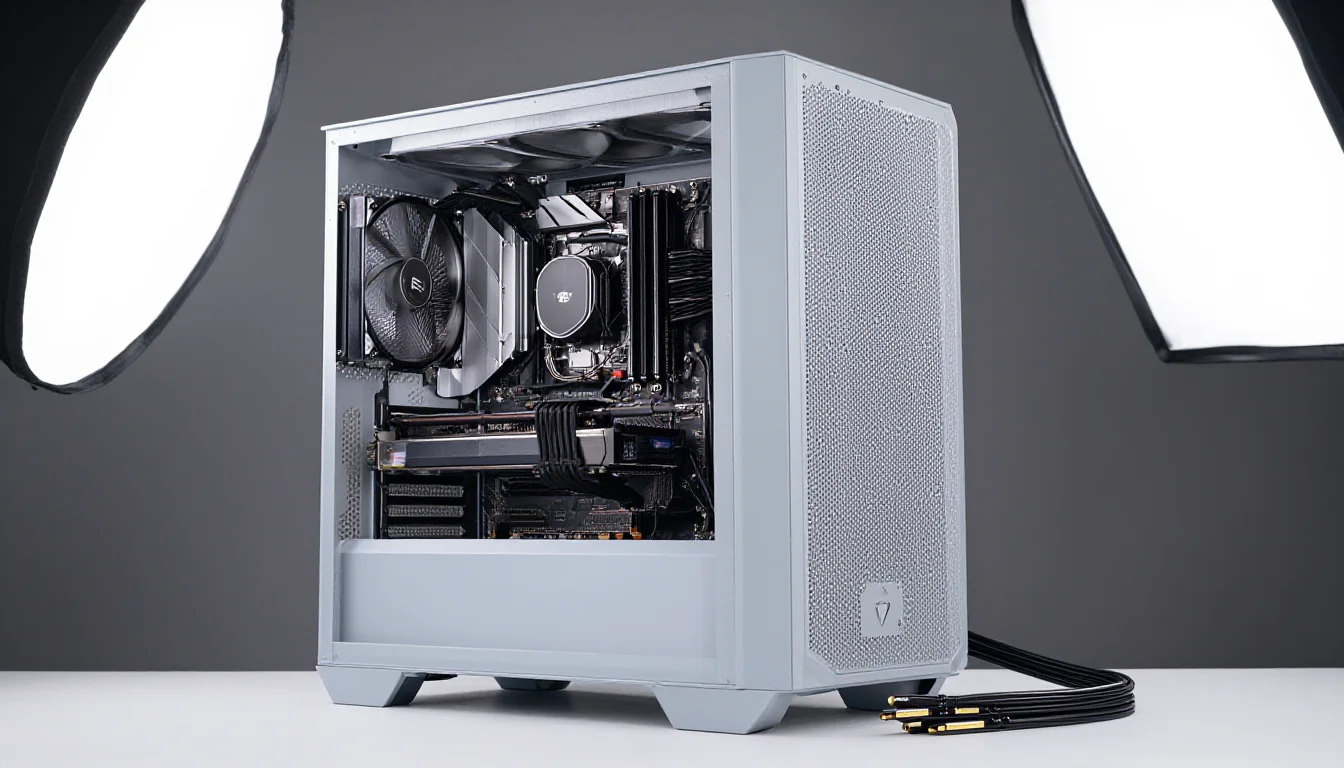
- Total price
- $2,000
- VRAM
- 16 GB + 64 GB System RAM
- Write tok/s
- 53.8
- Read tok/s
- 1652
- Load / idle power
- 454 / 55 W
- Noise
- 34 dBA
- Cost per million tokens
- 0.076
- Break-even
- 514 days
- Electricity, 4 h/day
- $159.65
- Electricity, 24 h/day
- $596.56
- Quant and context
- IQ3_S · 16K
- Runtime
- ROCm
- Evidence
- Measured
Overview
Confirm gfx1201 in both the kernel and the ROCm minor before anyone flashes a tool. This RDNA4 card carries 16 GB of GDDR6, writes 53.8 tokens per second, reads at 1652, and draws a published 454 W inside a $2000 Linux tower. The shape suits Qwen3-Coder quantizations that sit fully on the chip, not a resident 70B, which falls to hybrid offload even at IQ2_XS. Turn Above 4G Decoding and ReBAR on or the 16 GB map comes up short. Match the kernel and the ROCm minor to a published gfx1201 matrix before you trust a nightly package.
Best for
A new 16 GB RDNA4 Linux box aimed at Qwen3-Coder quantizations, not a resident 70B.
Tradeoffs
gfx1201 support is narrow, 16 GB rejects a resident 70B, and AMDVLK beside ROCm's Vulkan ICD breaks the default loader.
Bill of materials
| Role | Model | Specification | Est. street price (USD) |
|---|---|---|---|
| GPU | AMD Radeon RX 9070 XT | 16 GB GDDR6, gfx1201 | $800 |
| CPU | AMD Ryzen 5 7600 | 6 cores, AM5 | $219 |
| Motherboard | Gigabyte B650 Gaming X AX | Wi-Fi, PCIe 4.0 x16 | $169 |
| Memory | Kingston 64 GB DDR5-6000 | 2x32 GB EXPO | $149 |
| Power supply | be quiet! Pure Power 12 M 750W | 750 W, ATX 3.0 | $149 |
| Cooling | Thermalright Assassin Spirit | single tower | $49 |
| Chassis | Fractal Pop Air | mesh front | $109 |
| Storage | Samsung 990 EVO 4 TB | PCIe 4.0 model cache | $356 |
| Total | $2,000 | ||
Multi-model performance
| Model | Quant | Memory fit | Est. write tok/s | Max context |
|---|---|---|---|---|
| Qwen3.8-Flash-Next (125B MoE) | IQ2_XS | Hybrid offload | 19.4 | 8K |
| Qwen3-Coder (32B) | IQ3_S | Fits in VRAM | 49.6 | 16K |
| DeepSeek-R1 (70B Q4) | IQ2_XS | Hybrid offload | 11.2 | 8K |
| Llama-3.3 (70B Q4) | IQ2_XS | Hybrid offload | 11.8 | 8K |
Assembly, BIOS, and driver checklist
- Match the running kernel and the ROCm minor to a published gfx1201 support matrix before you install llama.cpp or flash a tool.
- Enable Above 4G Decoding and ReBAR. Without both, the 16 GB map comes up short and the coder context falls over.
- Cap the GPU with rocm-smi at 260 W. The published system load is 454 W, so the cap is the card, not the wall figure.
- Do not install AMDVLK and ROCm's Vulkan ICD in the same default path. The loader will pick the wrong ICD and compute will fail to open the device.
Questions about this build
Is every ROCm nightly safe for gfx1201?
No. Confirm gfx1201 in both the running kernel and the ROCm minor against a published matrix before anyone flashes a tool.
Will a 70B model reside on this 16 GB card?
No. The card suits Coder quantizations such as IQ3_S in full VRAM. DeepSeek-R1 and Llama-3.3 stay on hybrid offload even at IQ2_XS.
Can AMDVLK share the default Vulkan path with ROCm?
No. Do not install AMDVLK and ROCm's Vulkan ICD in the same default path, or the loader selects the wrong ICD.