RTX PRO 6000 96 GB workstation
171.1 write tok/s from 96 GB of ECC GDDR7, once the Enterprise driver is the one that stays.
- Total price
- $18,317
- VRAM
- 96 GB + 64 GB System RAM
- Write tok/s
- 171.1
- Read tok/s
- 8987.9
- Load / idle power
- 720 / 90 W
- Noise
- 38 dBA
- Cost per million tokens
- 0.1
- Break-even
- 1088 days
- Electricity, 4 h/day
- $256.23
- Electricity, 24 h/day
- $946.08
- Quant and context
- Q5_K_M · 128K
- Runtime
- CUDA
- Evidence
- Measured
Overview
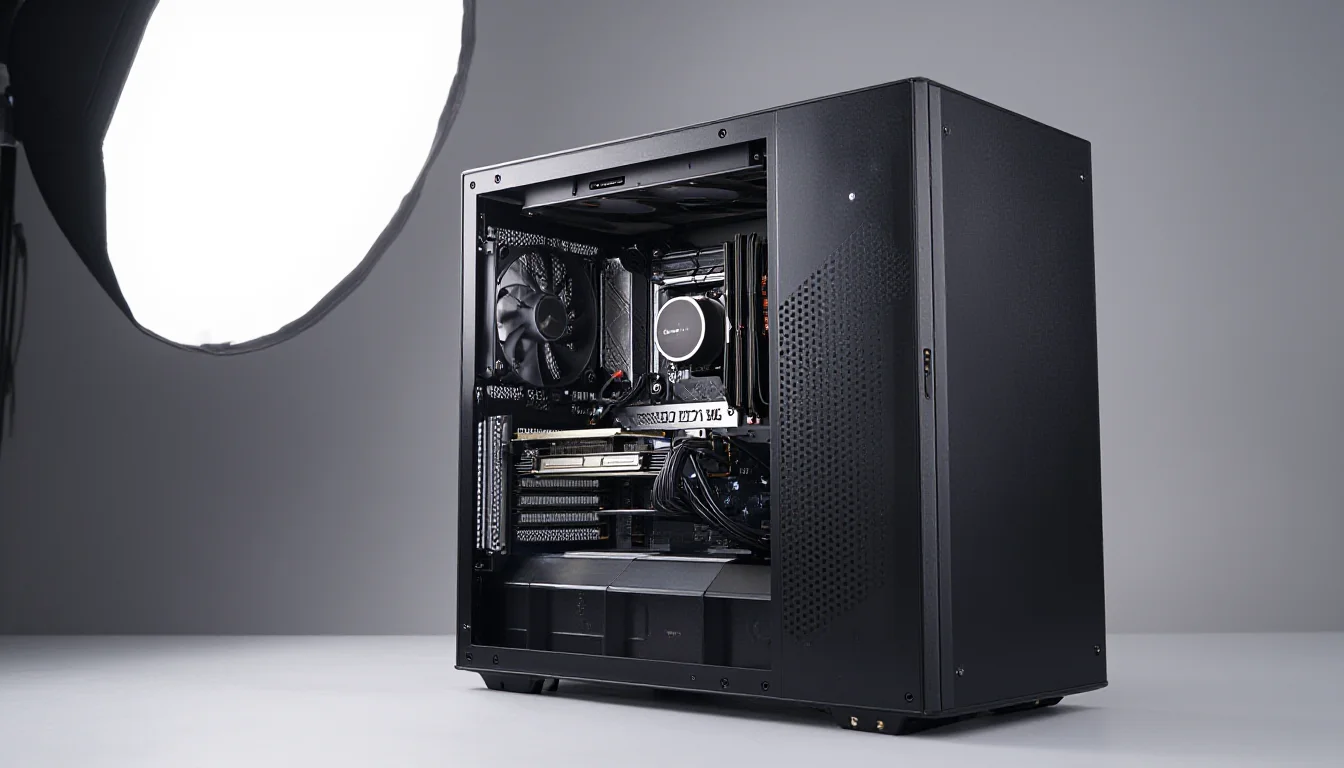
Install the RTX Enterprise driver, not a Game Ready package: the seventeen-thousand-dollar line item is the framebuffer. This workstation tower carries 96 GB of ECC GDDR7, measured at 171.1 write tokens per second and 8987.9 read tokens per second inside a 720 W system, priced at $18317. A 70B Q5 and a long coder context both stay on the device. The card is electrically a 600 W-class part and physically a dual-slot workstation board. The platform around it is only the published twelve-hundred-dollar host allowance. Point the blower at a rear exhaust, leave ECC scrubbing on, and feed the box from the 1200 W supply.
Best for
A desk that must keep a 70B Q5 and a long coder context on one 96 GB ECC board.
Tradeoffs
The framebuffer is almost the entire $18317, the blower is not a quiet gaming cooler, and the host around it is only the twelve-hundred-dollar allowance.
Bill of materials
| Role | Model | Specification | Est. street price (USD) |
|---|---|---|---|
| GPU | NVIDIA RTX PRO 6000 Blackwell | 96 GB GDDR7 ECC, dual-slot blower workstation | $17,117 |
| CPU | AMD Ryzen 9 7900 | 12 cores, 65 W, AM5 | $249 |
| Motherboard | ASUS ProArt X670E-Creator | workstation ATX, reinforced x16 | $219 |
| Memory | Kingston 64 GB DDR5-5600 | 2x32 GB, EXPO | $199 |
| Power supply | Corsair HX1200i | 1200 W, workstation headroom | $199 |
| Cooling | Noctua NH-U14S | single tower, blower exhausts the GPU | $79 |
| Chassis | Fractal Define 7 | workstation orientation, rear exhaust | $129 |
| Storage | Samsung 990 Pro 2 TB | PCIe 4.0, OS and weights | $126 |
| Total | $18,317 | ||
Multi-model performance
| Model | Quant | Memory fit | Est. write tok/s | Max context |
|---|---|---|---|---|
| Qwen3.8-Flash-Next (125B MoE) | Q4_K_M | Fits in VRAM | 118.6 | 64K |
| Qwen3-Coder (32B) | Q6_K | Fits in VRAM | 164.2 | 128K |
| DeepSeek-R1 (70B Q4) | Q5_K_M | Fits in VRAM | 96.4 | 64K |
| Llama-3.3 (70B Q4) | Q5_K_M | Fits in VRAM | 99.1 | 64K |
Assembly, BIOS, and driver checklist
- Install the NVIDIA RTX Enterprise driver and blacklist the Game Ready repository so a desktop update cannot replace it.
- The blower wants a rear exhaust, not a glass recirculation path. Leave the Define 7 rear opening clear.
- Leave ECC scrubbing enabled. A 96 GB framebuffer that silently drops ECC is not the board you bought.
- A 1200 W HX1200i feeds the published 720 W system figure with margin for the Ryzen 9 7900.
Questions about this build
Does a 70B at Q5_K_M stay on this card?
Yes. Q5_K_M for DeepSeek-R1 and Llama-3.3 stays in the 96 GB ECC framebuffer, and Qwen3-Coder at Q6_K still keeps a long context on the device.
Should this tower install the Game Ready driver?
No. Install the NVIDIA RTX Enterprise driver and blacklist the Game Ready repository so a desktop package cannot replace it.
Is a 1200 W supply enough for the 720 W system figure?
Yes. The published load is 720 W, and the HX1200i still has margin for the Ryzen 9 7900 and the drives.